Albania
Alcogolic drinking in Albania
The preferred alcoholic hard drink is raki that is locally produced in small towns as well as in many homes in the countryside; in some instances you may run across men washing down breakfast with a few shots.
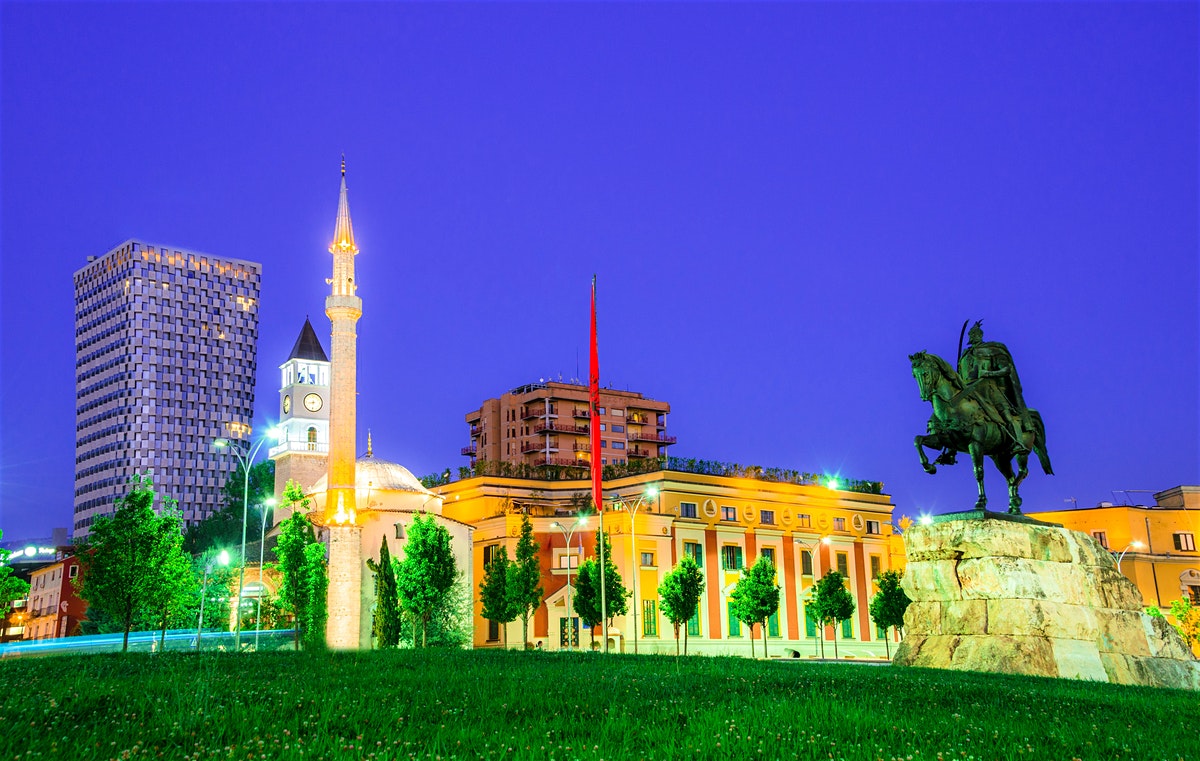
Tirana is the capital of Albania
Tirana is the capital and the largest city of Albania. Modern Tirana was founded as an Ottoman town in 1614 by Sulejman Bargjini, a local ruler from Mullet, although the area has been continuously inhabited since antiquity. Tirana became Albania's capital city in 1920 and has a population of over 600,000. The city is home to many universities and is the center of the political, economical, and cultural life of the country.
Languages of Albania
Republic of Albania, Republika e Shqipërisë. 3,154,000. National or official language: Tosk Albanian. Literacy rate: 85%. Blind population: 2,000. Deaf population: 204,565 (1998). The number of individual languages listed for Albania is 7. Of those, all are living languages.